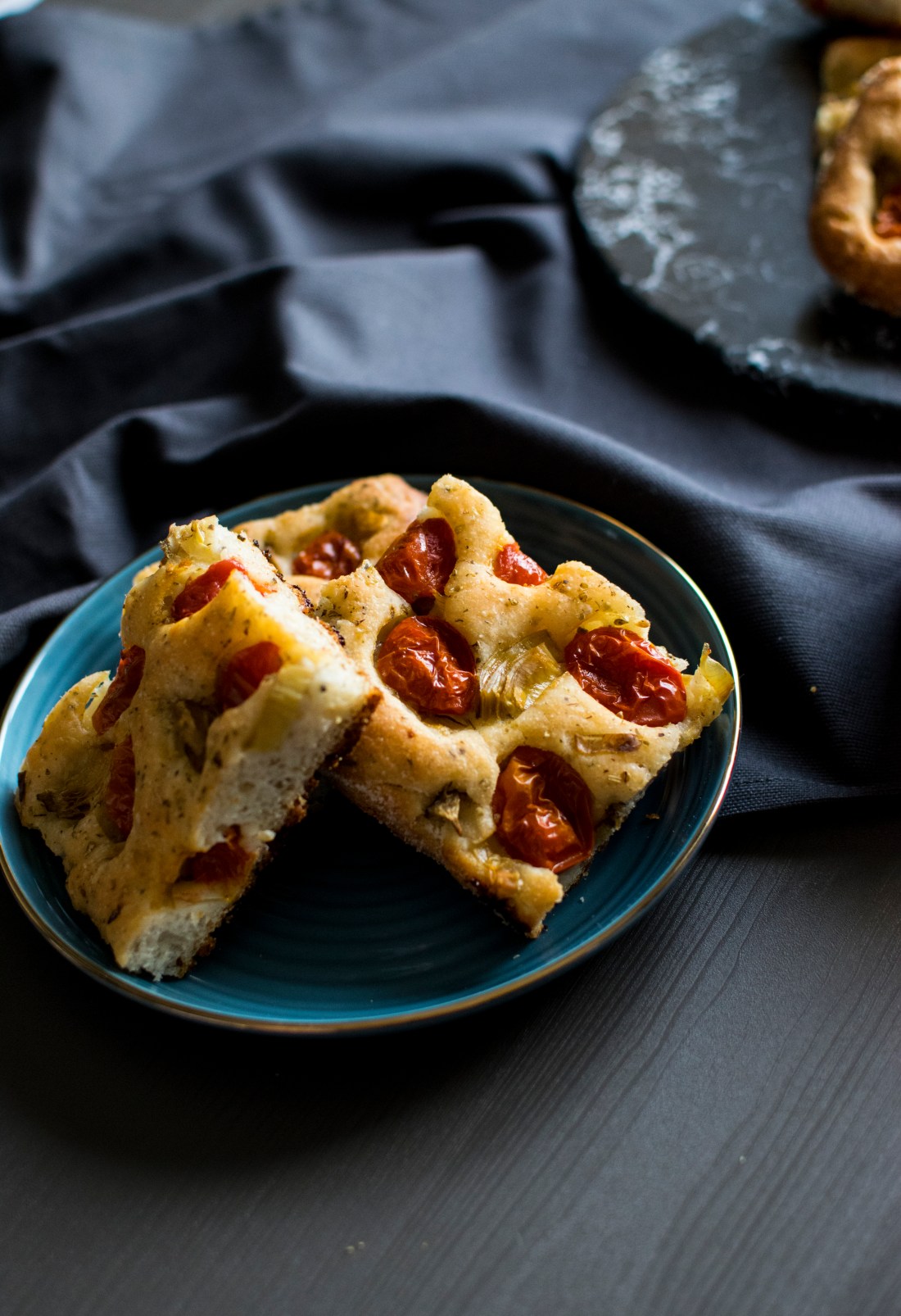
Foccacia is an Italian flatbread that you can transform however you like and with what you have available. It is also a great method of converting some leftover veggies into something absolutely delicious.
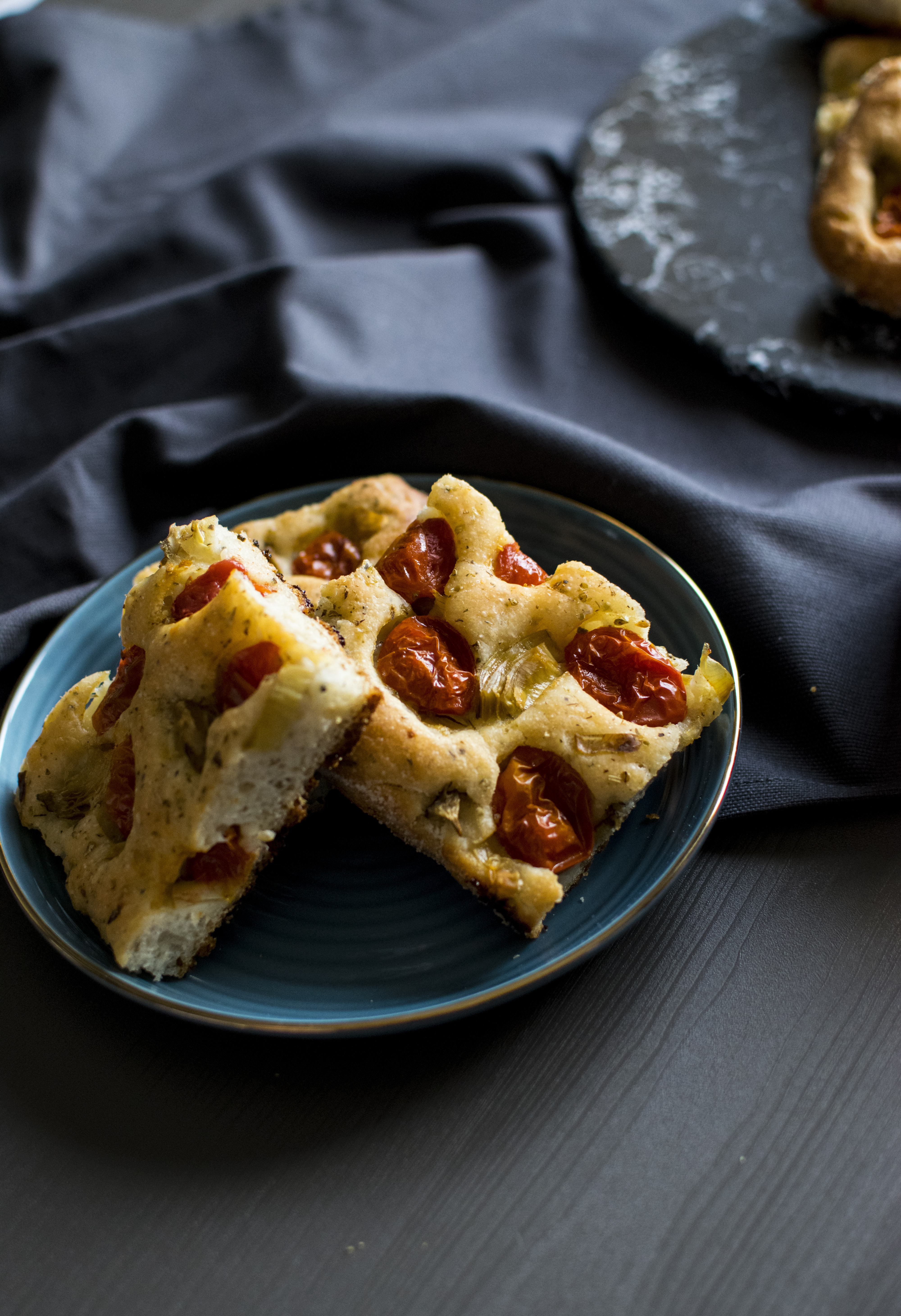
One of the main things that I try to do, the best that I can, is to make sure that I don’t let the food go to waste, so what I can repurpose in another dish, I will. This is what I do with cherry tomatoes, when I have just a few left, and I know I don’t have any use for them, I convert them into a foccacia. You can top foccacias with what you want or like, you can just sprinkle some herbs on top and/or a bit of salt. My favorite combination is tomatoes and artichokes, and if I have any, I may add a bit of pecorino.
This recipe is pretty easy, you can adapt it to what you like (and I say that because I know that there are people that maybe don’t like artichokes, or tomatoes), but I really suggest that you try this combo.
I will give you tips for the dough throughout the recipe and please leave questions in the comments if you have any.

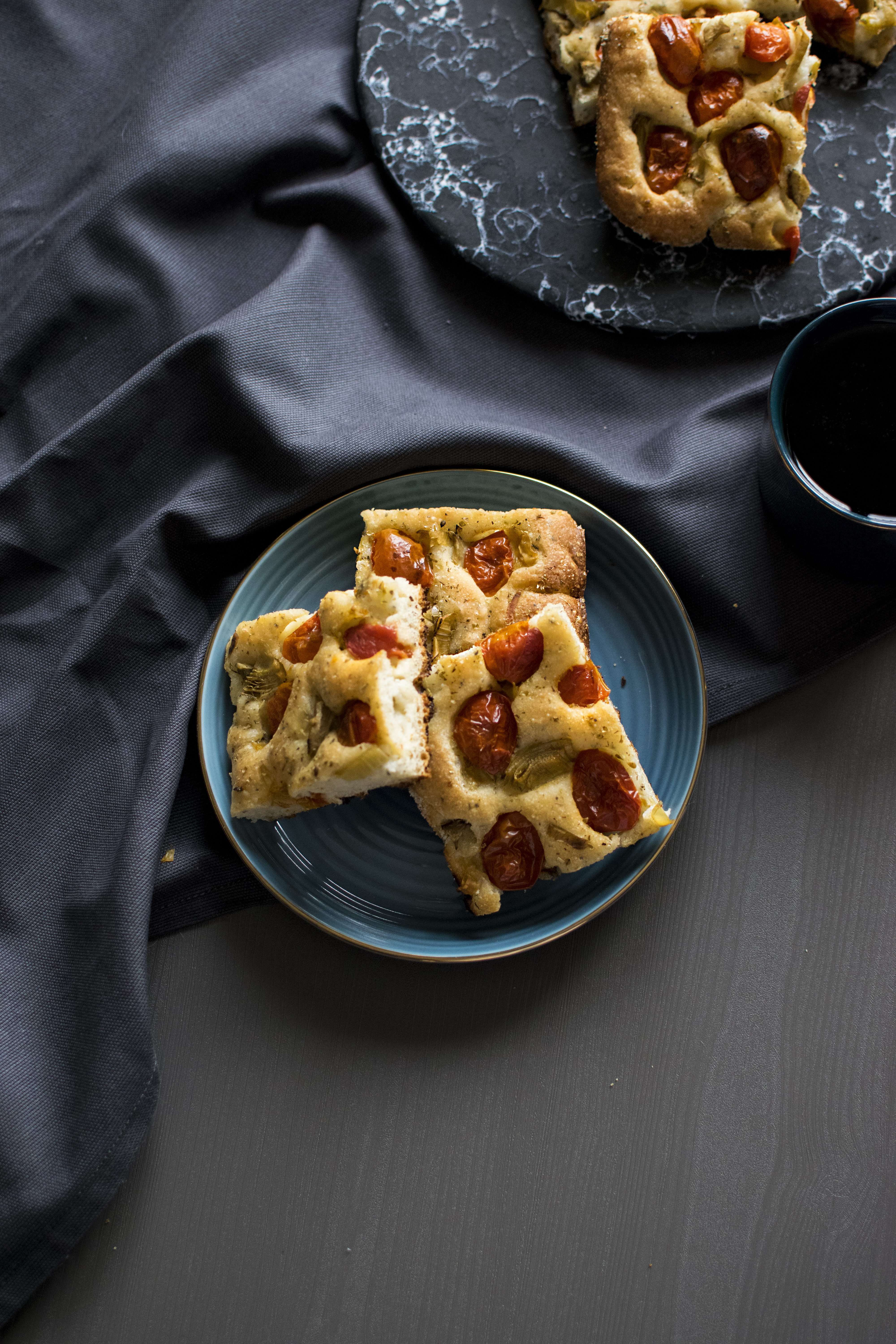
Let’s start!
Ingredients:
Dough:
- 500g flour – make sure it is a strong flour, one that will allow you to have a very elastic dough
- 325 g water
- 10g fresh yeast (or you can use 5-7g dry yeast)
- 5g salt
- 3g herbs – I used oregano, basil, and a bit of a mix of provence herbs (this contains some rosemary, basil…)
- 3 cloves of gralic
Toppings:
- ~200g cherry tomatoes
- a handful of artichokes
- 2 tbsp basil pesto
Method:
To prepare the dough:
- Add the flour and water in a bowl. If you use fresh yeast, melt the yeast with your hands in the water (you can do this before adding the water in the bowl, but that just makes it another thing that I have to wash after). Add the salt and the herbs. If you want an approximate in grams for the herbs, I added about 3 grams of herbs in total. Mash the garlic and add it to the bowl as well.
- Start mixing gently to incorporate the dry ingredients and the water. Make sure to scrape the flour off the margins of the bowl in the mixture as no flour has to remain dry.
- Once you have a big pile of sticky mess, it is time to knead. Start by kneading in the bowl, folding the dough onto itself and continue until it starts to come together.
- Take the dough out of the bowl and put it on the working surface. Start kneading by stretching the dough continuously. You want to develop the gluten bonds and have a nice elastic dough, so this is the way to do it.
- In between the kneading process, what I like to do is to use “slap and fold” movement. I basically take the dough and throw it on the work surface, stretching and folding it when it reaches the table. I know it sounds weird, but just imagine that the dough is a ball that you want to throw, with quite some force, and as the dough stretches to reach the table, try to fold it on itself. This helps a lot with the gluten development, and it speeds up the kneading process.
- After about 10-15 mins you should have a nice smooth and stretchy dough. Your dough is ready when it can pass the window pane test – stretch one margin of the dough with both hands; the dough should stretch without breaking easily, and you should be able to build tension if you roll it.
- Now this is a foccacia, so the best part of it is that we don’t have to shape it. Shaping the dough when making bread is usually what may actually impact the end result quite a lot. Lay the dough in a bowl that’s been coated with olive oil. Cover with plastic wrap or a wet towel and leave it proof for about an hour, or an hour and a half. You can also leave it in the fridge overnight.
- After the time to proof has passed, put the dough in a baking tray that you have previously coated with olive oil and sprinkled semolina on the bottom.
- This is the moment you’ve been waiting for. It’s time to create the dimples for which foccacia is so famous. Basically you start pushing your fingers through the dough (be gentle, you don’t want to deflate it) and create little dimples over all the dough surface.
- I usually make some flavour combination on a half and a different one on the other, therefore, on the first half I added cherry tomatoes cut in halves or quarters and small pieces of artichokes. On the other half I spread 2 tbsp of basil pesto and the rest of the cherry tomatoes.
- Let it proof for another hour.
- Preheat your oven to 180 C and put the tray in the oven for about 35-40 minutes. The outside should be slightly crispy.
- Once you take it out of the oven, drizzle some olive oil on top of it, while it’s still hot.
And that is it! You now have foccacia! You can serve it just as it is, or you can have some cheese and wine on the side, or even a creamy soup. The possibilities are endless, and so are the toppings. You can basically put anything on it: tomatoes and basil, potatoes, gorgonzola, pecorino, mushrooms, you name it.
The thing that adds to this recipe is the flavouring that you put inside. First time I made it, I did not add anything but salt as a seasoning, and just put herbs on the outside, and it was not as tasty. So, if you want to have a burst of flavour, add some herbs and garlic in the dough.

 Better Than Salads