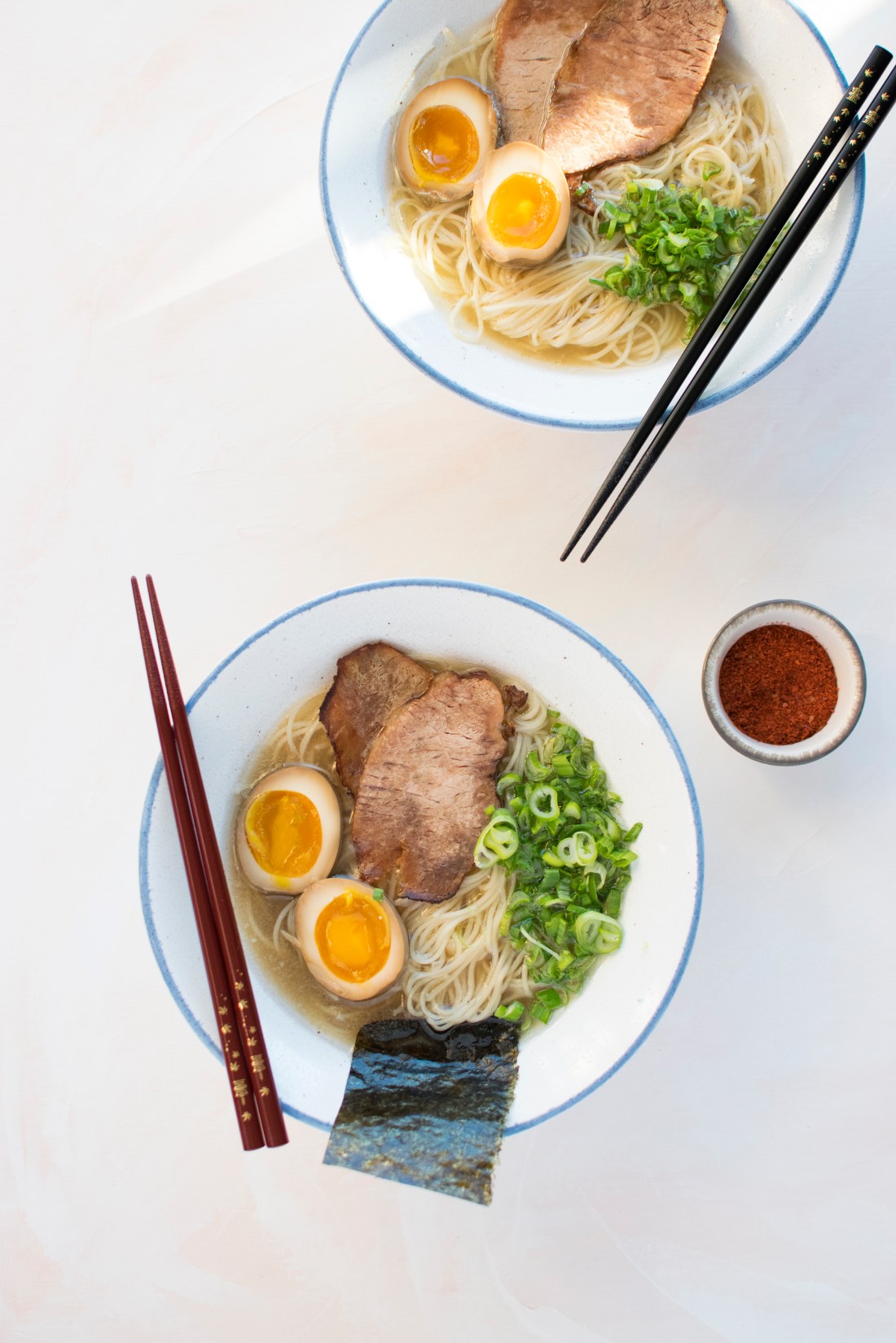
Are there any foods that are not part of your culture that you really want to try, but don’t really have the opportunity? Like you did not visit the country yet, or you don’t have a restaurant that serves that dish in your city, or maybe it seems hard to make? For me, Asian cuisine is like this. I am fascinated by the food, the way it looks, the way it sounds and what it contains, which is why I tried to make as many recipes as I could from their cuisine, more specifically Japanese cuisine.
Ramen is one of those foods that I have only tasted made by myself, because each time I tried to order ramen from the usual sushi place that we order from, they never had it. In this case, I tried my best to replicate the ramen from its origin, with ingredients that I had and that I could find. I think that it is quite important to respect, as much as you can, the base of the dishes, mostly when they are from a different culture than yours, because that way you can actually get the closest experience to the original one. You can’t say you’ve made ramen if you use ingredients that are never used in the Japanese cuisine, or if you don’t use the same sources of salt, acidity and umami that they do. Your final product may taste amazing, but it will be very far of what it was meant to be.
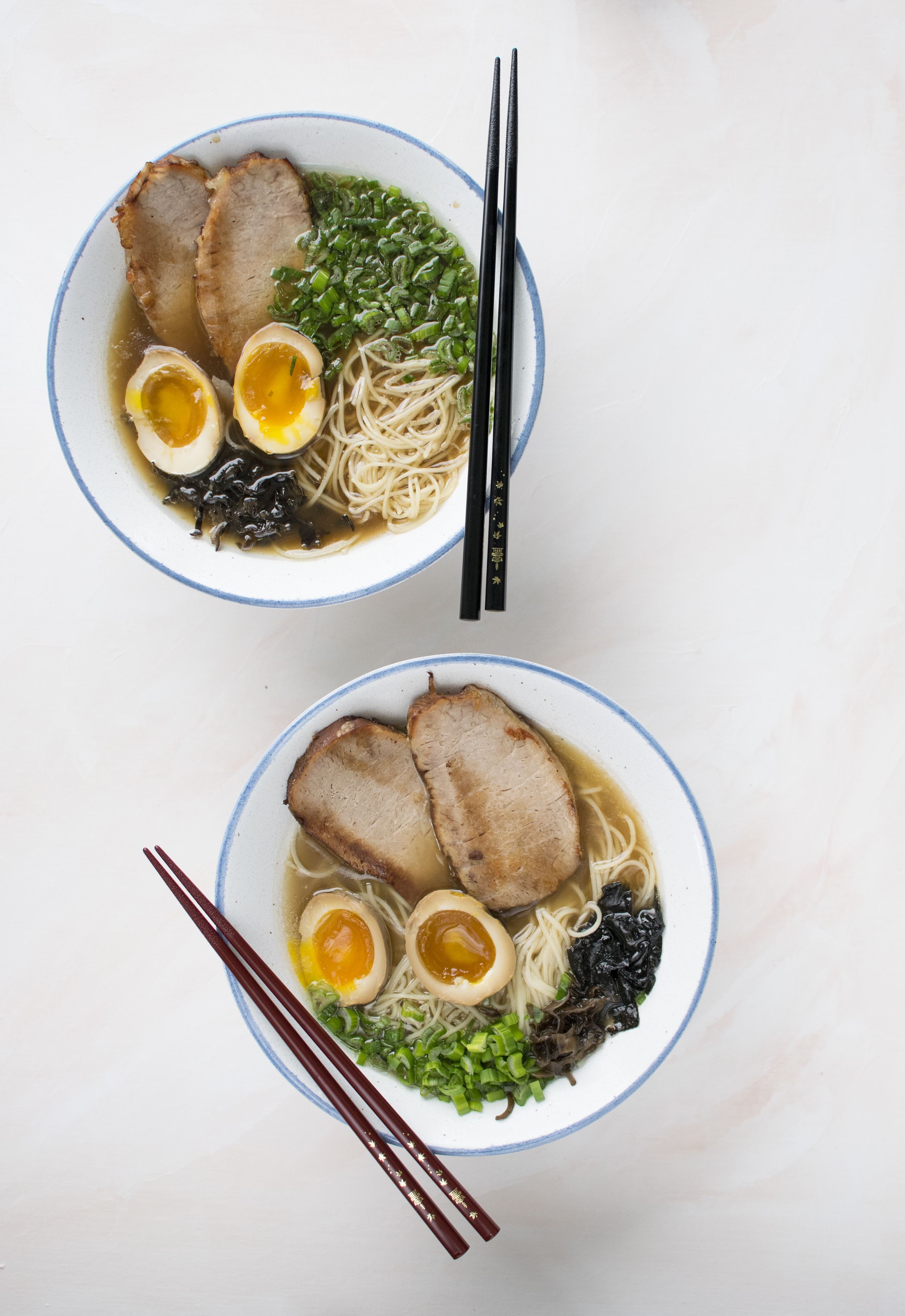
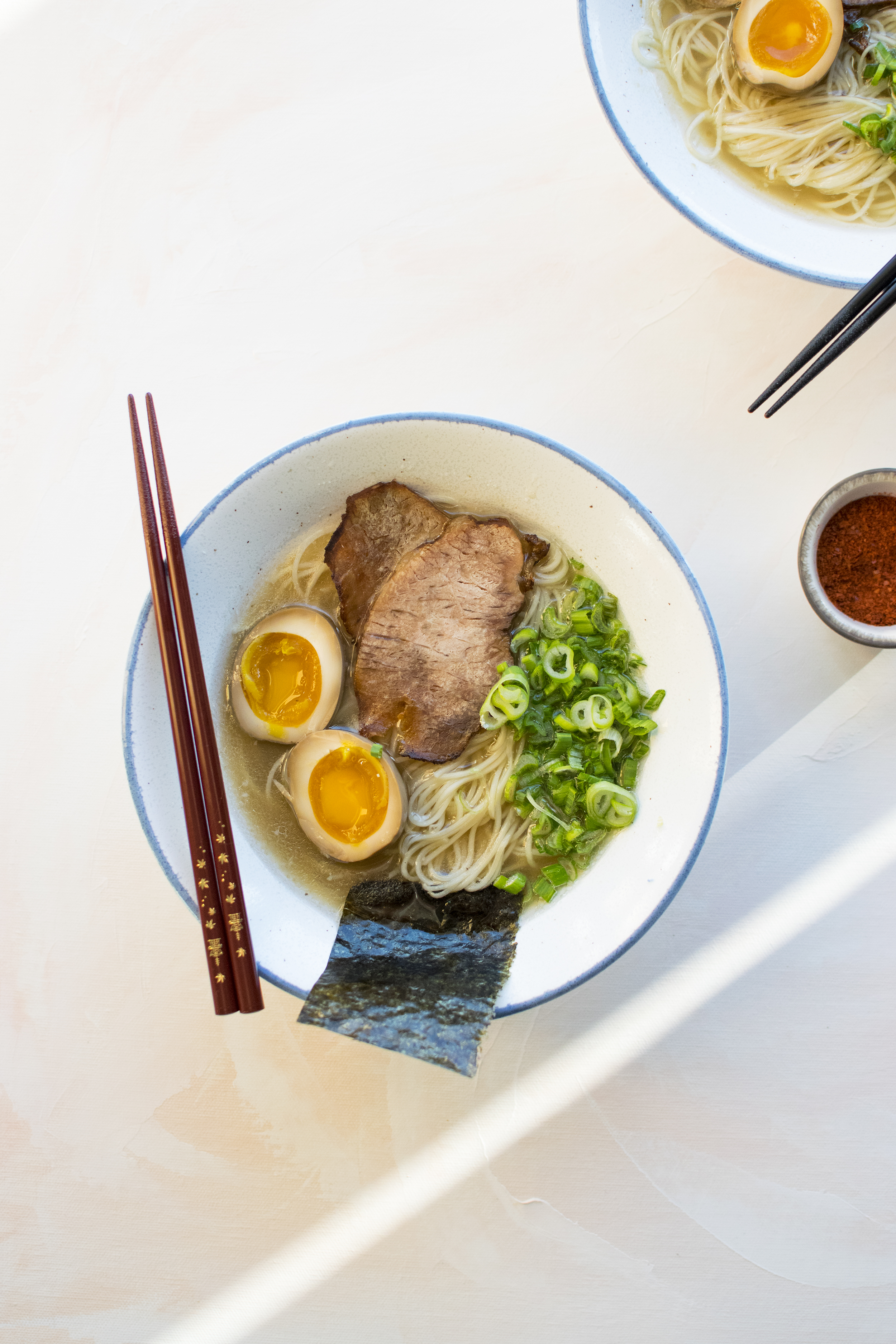
Now, let’s get to a basic understanding of what goes into ramen:
- bone broth – can be made with pork bones, chicken, fish, to be honest I don’t think there is any restriction. In my case, I went for pork bones (hence the Tonkotsu in the title), and for a paitan broth – a cloudy broth. The clear broth is called chintan.
- tare – this is the seasoning of the ramen. This will bring the salt and the depth of flavour.
- aromatic oil – this brings not only taste, but fragrance too.
- toppings:
- chashu – this is the meat that you have on top, in most cases it is pork based, either the traditional rolled pork belly, pork shoulder, etc.
- ajitama – or the ramen eggs; these are cured eggs
- spring onions, sprouts, mushrooms, it really depends on the ramen style
- noodles

Having that down, I think it is time to talk about ingredients and the method. I will tell you what I used for this particular variation of ramen, but there are so many ways in which you can change it to fit your liking.
Ingredients:
Broth:
- 3 kg pork bones
- 6 liters of water
Tare:
- 120 ml soy sauce
- 60 ml sake
- 80 ml mirin
- 25 g sugar
- 40 g salt
- 1/2 tsp rice vinegar
- 350 ml dashi (mine was made with prawn shells, katsuobushi and kombu; see the Okonomiyaki post if you need more details)
Aromatic oil:
- 150 ml oil rendered from pork fat + vegetable oil
- 7 cloves of garlic
- 1/2 yellow onion
- the white part of two spring onions
Chashu:
- 1 piece of 800 g – 1kg of pork – I used cutlet, but pork neck was way better when I made that one, it was a little bit more tender
- 120 ml soy sauce
- 120 ml mirin
- 120 ml sake
- 10 g salt
- 1 piece kombu
- a handful of shiitake mushrooms – about 5 or 6
- 100 g sugar
Ajitama:
- 6 eggs (make as many as you think you will eat, you will use one per portion, mine were also small)
- 120 ml soy sauce
- 60 ml mirin
- 60 ml sake
- 4 shiitake mushrooms
- 2 cloves of garlic
It may seem excessive when you see the list of ingredients, but there are some things that you can make ahead so that you can kind of finish with ramen in one day (and a few mins for overnight prep).
Method:
- A night before the day of making ramen, sort the bones, put them in a big pot/container of cold water and pop them in the fridge and leave them overnight.
- Prep the eggs. You want them to cure for 1-2 days the least, so do this the night before as well.
- One tip I learned from Adam Liaw is to poke a hole at the bottom of the egg (with a metal skewer). This helps a lot in the peeling process.
- Put some water in a pot and bring it to a boil. When the water is boiling, add the eggs and leave them in for 6 minutes. This is how you get a lovely soft yolk egg.
- For the marinade mix the ingredients, chop the dried shiitake mushrooms and the garlic.
- Cool the eggs immediately after you get them out of the pot. Peel them, and the add them in the curing liquid. Pop them in the fridge.
3. Broth:
- Take the bones out of the water, put them in the pot and cover them with 6 liters of cold water. Bring to a boil, and after 20 mins, remove from heat, wash the bones with cold water and wash the pot. Put them back in the pot in cold water.
- Bring to a boil and then reduce the heat slightly. Remove the scum, and once you have none too remove, cover with a lid and let it simmer for 6 to 8 hours. The broth will get cloudier after about 4-6 hours.
- I did not add any aromatics to the broth, no salt, just the water and bones.
- When the broth is done, remove it from heat and put it in an ice bath to cool immediately.
4. Chashu:
- While the broth is doing its thing we can made the chashu.
- I cut off most of the fat, because I don’t really like it, you can prep the meat as you like. You can tie it in a roll if you want.
- You can sear the meat slightly before braising, but I just directly added it in cold water. If you do so as well, repeat the process from the bones. After 20 mins of boiling, wash it with cold water (this removes the scum), clean the pot and place it back with clean water.
- Add the aromatics and let it cook, simmering, on low heat for 2 hours. Just remember to remove the kombu when it starts to have a gelatinous film on it (usually after about 20 mins).
- After it is done, let it cool and refrigerate over night. You can also make this the night before, same night you made the eggs.
These are the main time consumers of ramen, once you have these, you are left with the seasoning part of the broth.
5. Tare – this is easy, put everything in a pot and heat it up. I would recomend tasting it to see if it is salty enough.
6. Aromatic oil:
- I took some of the pork fat that remained from my chashu piece, added to a pot with some sunflower oil and started rendering the fat.
- Peeled and smshed the garlic with the back of my knife. Threw the onions in and kept it on low heat until the garlic was golden brown.
Now that we have all the elements ready, let’s make our bowl of ramen. We usually serve it the next day, that way the chashu stayed overnight in the fridge and the eggs are cured.
You might have noticed that I did not say anything about the noodles. Well, I am not making those myself (yet) so, make sure you have some wheat ramen noodles.

Serving:
- Heat up the broth, I like to serve it very hot.
- Prep the chashu. You can heat it in the oven, pop it in a hot cast iron pan or grill it.
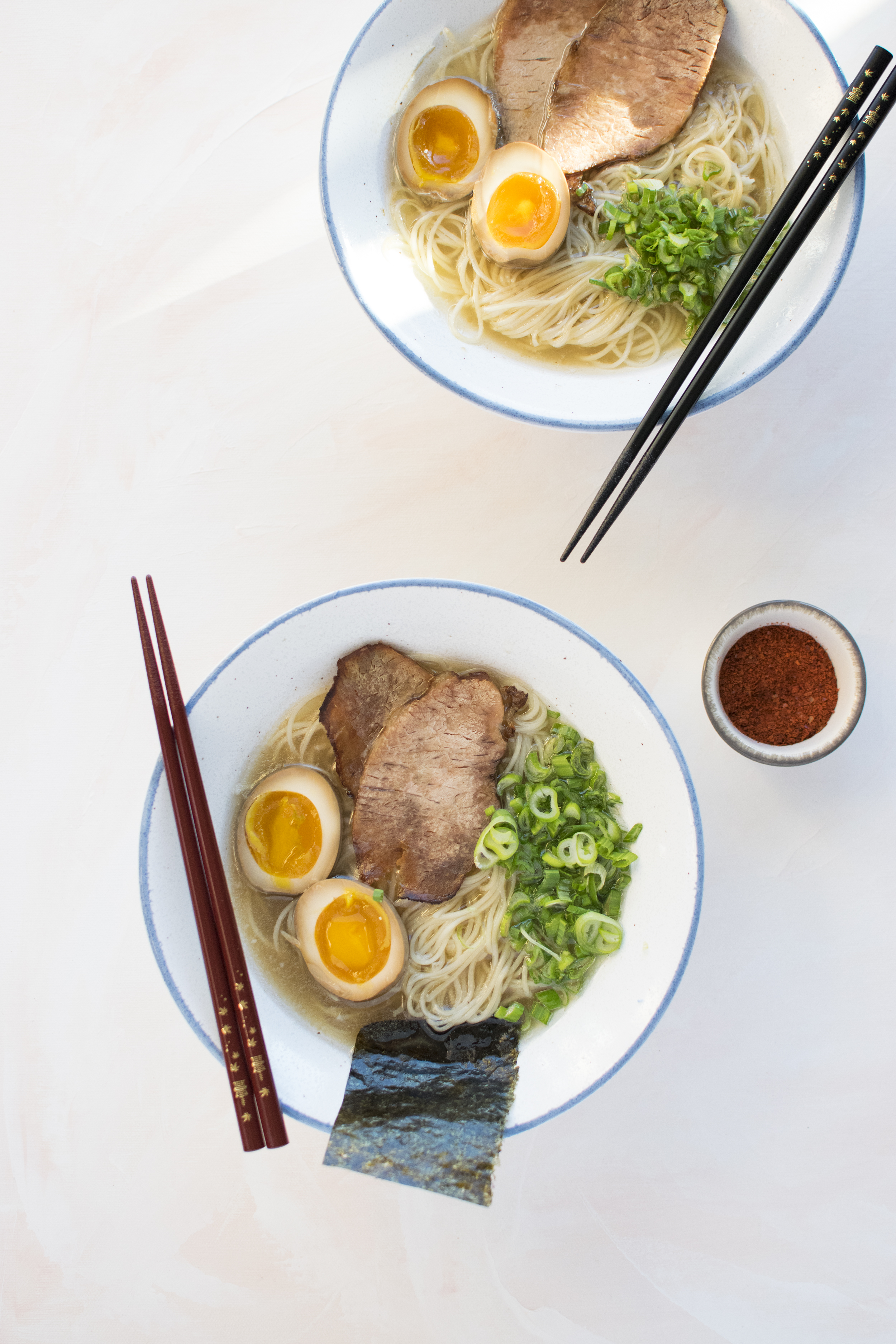
- Chop up some green onions, some rehydrated wood ear mushrooms, some nori if you like it. You can also add menma – tried it but I am not a fan – or maybe some other toppings, choose the style of ramen that you like.
- Add a few ladles of broth in the bowl and then it is time to season it. Add tare and aromatic oil to taste. In my case it was about 60 ml of tare and 1 tsp of aromatic oil. Taste and adapt the quantities as you like them. Just remember how much you’ve put in it so that you can make all of them the same.
- Boil the noodles as instructed on the package. Shake them well before adding in the bowl.
- Add the chashu, the desired toppings and of course the delicious cured egg.
And there you have it, a rich and delicious bowl of ramen. In addition to the above mentioned toppings, what I like to add is some chili powder and a bit of garlic powder, and I love how they complement the broth. I must admit that when I make ramen, I like to play with the tare ratios and the toppings and basically have a different bowl of ramen every day.
So, if you want to try ramen and make it yourself, this is ramen broken down for you. I really want to try other types of ramen as well, so maybe we will see each other with some more recipes besides the classic tonkotsu.

 Better Than Salads